
The Invisible Lifeline
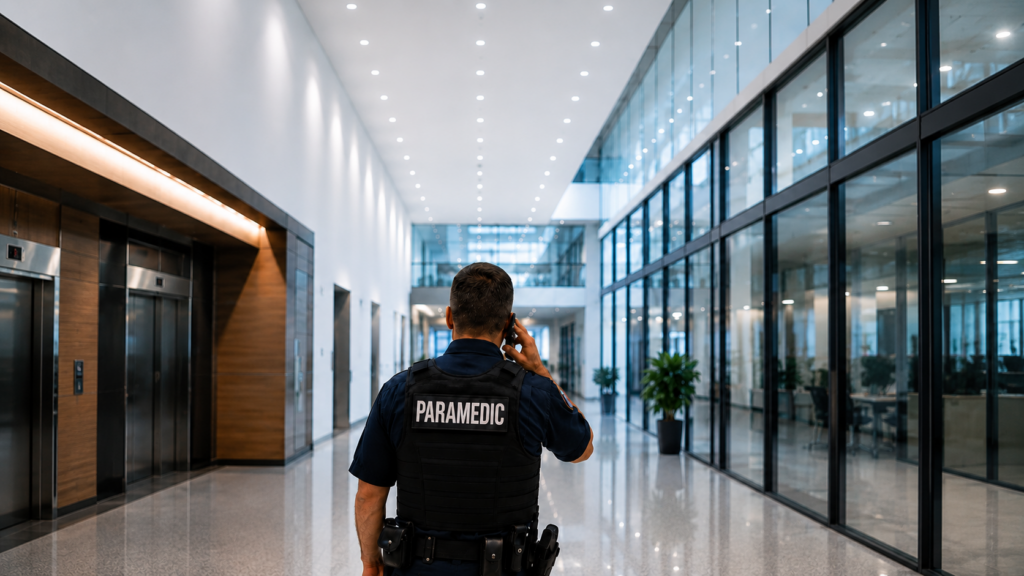
When an emergency occurs inside a high-rise, hospital, or commercial complex, every second counts. First responders—police, fire, and medical personnel—rush into the environment relying on one critical tool: their two-way radios. If their communication systems fail in a stairwell or a subterranean parking garage, lives are put at immediate risk.
For system integrators, building owners, authorities, and infrastructure suppliers, providing a robust Public Safety Communication System is not just a technical upgrade; it is a legal and moral mandate. Here is why upgrading your in-building wireless infrastructure with a modern Digital Distributed Antenna System (DAS) is the ultimate way to ensure emergency readiness. It will help you achieve regulatory compliance, and protect your most valuable assets.
Why Flawless Emergency Coverage is Non-Negotiable
Understanding the life-saving and commercial value of in-building public safety wireless is essential for modern property management.
- First Responder Safety and Coordination: During a fire or security incident, visibility is low, and chaos is high. Responders rely entirely on mission-critical networks (such as TETRA, UHF, or VHF) to coordinate evacuations and request backup. A dropped signal in a critical moment is unacceptable for public safety.
- Regulatory Compliance and Liability: In most jurisdictions, strict fire and building codes mandate comprehensive indoor radio coverage for first responders. Failing to provide this infrastructure can block a building from receiving its Certificate of Occupancy. This will delay openings and drastically increase liability for property owners.
- The “Green Building” Dilemma: To meet crucial ESG (Environmental, Social, and Governance) targets, modern buildings are constructed using heavy insulation, concrete, and energy-efficient low-E glass. While excellent for the environment, these materials act as a digital fortress. It completely blocks outside emergency radio signals. An active indoor DAS bridges this gap, creating a pristine internal communication environment without compromising the building’s sustainability.
- Unified Infrastructure: Modern properties can no longer afford to run separate, clunky cabling systems for commercial cellular (5G/4G) and emergency radios. Building owners need a streamlined solution that handles everything safely and efficiently.
The Power of Software-Defined Digital DAS for Public Safety
Historically, providing emergency coverage meant installing rigid analog systems. These are usually with heavy, inflexible coaxial cables. If a system failed or interference occurred, identifying the problem was a slow, manual process.
The modern solution is a Software-Defined Digital DAS. By digitizing the radio frequencies at the source, standard digital fiber-optic connections flawlessly distribute the signal. This means the fiber perfectly transmits the critical radio signal to the furthest corners of the building. This without the noise or signal degradation associated with older analog infrastructure.
Think of it as a smart, digital highway: you install the fiber once. The software ensures that emergency traffic always gets priority and a clear path.
Groundbreaking Innovation: Why Maven Wireless Leads the Public Safety Market
When lives are on the line, “good enough” is not an option. Maven Wireless has engineered a truly native digital platform that redefines mission-critical communications. Here is why our products are recognized as the best on the market:
- Dedicated Public Safety Integration: Our modular Orion Master Units are specifically engineered to support essential emergency bands. We offer dedicated band modules for UHF (380-470 MHz) and VHF (136-174 MHz). This ensuring seamless integration with standard public safety networks like TETRA.
- Strict Digital Separation: Strict Digital Separation: Separating sector inputs via digital filtering allows a single system to combine signals from several different operators and safety networks. Our software-defined filters ensure that heavy commercial cellular traffic never interferes with life-saving emergency radio channels.
- Mission-Critical Redundancy: A public safety system must survive chaotic conditions. Our digital DAS automatically registers unit interconnections and supports advanced Ring and Mesh topologies. If a fire or structural collapse severs a fiber-optic cable, the system instantly and automatically reroutes the emergency signal. This via an alternative path around the ring, maintaining critical coverage.
- Advanced Base Station Failover: For ultimate resilience, our system features a Switched Redundancy mode. If a primary emergency base station fails or loses power, the Maven DAS will automatically switch the coverage over to a secondary, redundant base station feed. This ensures the communication lifeline never breaks.
- Total Software Control and Mute: In sensitive situations, control is everything. Operators can remotely monitor and change coverage parameters via the management GUI. Furthermore, for safety reasons or tactical control, the system features an RF Mute capability. This allowes downlink and uplink signals to be gated off instantly on a per-sector or per-route basis.
- All-in-one solution: Seamless hybrid support for both traditional systems (TETRA/DMR) and modern 4G/5G networks (including MCX) for Public Safety – all within a single digital DAS platform.
The Verdict for Infrastructure Owners and Authorities
The best building communication infrastructure actively protects everyone inside, no matter what happens. A high-capacity, software-defined Digital DAS is the invisible, unbreakable lifeline that powers emergency response. If you invest in a system that features automatic redundancy, flawless digital filtering, and dedicated public safety support, you are not just meeting a building code—you are saving lives.