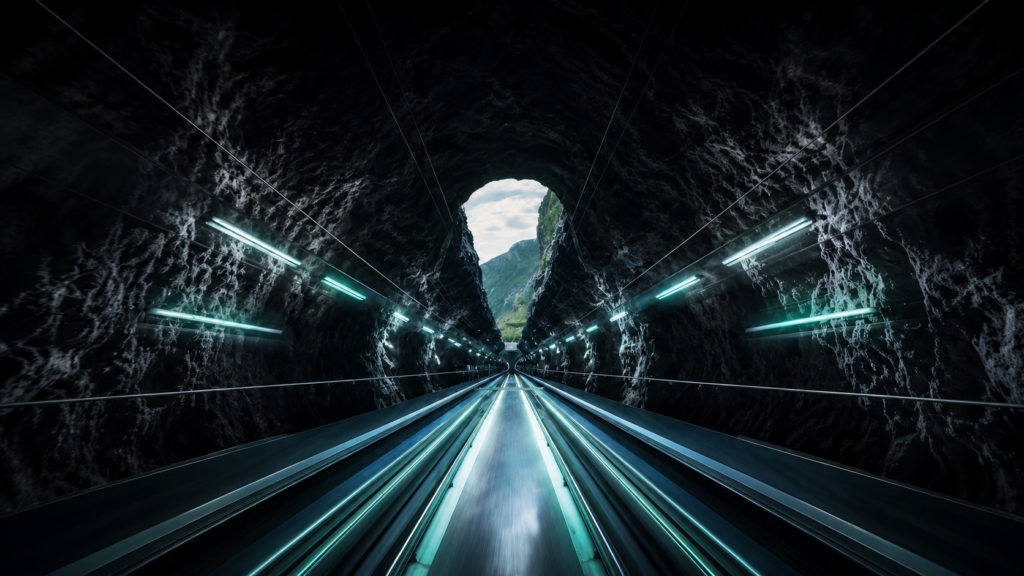

The Digital Backbone of Modern Infrastructure
In today’s hyper-connected world, mobile coverage in a tunnel is crucial. A tunnel is no longer just a passage through a mountain or under a city; it is a critical link in our digital infrastructure. Whether it is a high-speed rail link, a busy road tunnel, or a metro system, commuters and operators now expect seamless connectivity that doesn’t drop the moment they enter the portal.
For infrastructure suppliers, authorities, and consultants, the challenge is clear: providing robust, reliable, and high-capacity wireless coverage in one of the most demanding environments on Earth.
Why Digital DAS is the Future of Tunnel Connectivity
Traditional analog systems are often rigid and difficult to maintain in long tunnel segments. Modern Digital Distributed Antenna Systems (DAS), like the Maven Wireless Nebula, represent a paradigm shift in how we approach tunnel coverage.
1. Unlimited Reach and Capacity
Tunnel projects often span several kilometers. Unlike analog systems where signal quality degrades over distance, a digital DAS transmits signals perfectly over standard fiber-optic links for distances up to 40+ km. This ensures that whether a passenger is at the entrance or in the deepest section of a rail tunnel, they experience the same high-quality 5G-ready mobile coverage for tunnel solutions.
2. Software-Defined Flexibility
In a tunnel, physical hardware changes are expensive and dangerous to perform. With a software-defined digital DAS, its possible to adjust capacity and sectorization remotely through a management GUI.
- Dynamic Allocation: Shift power and bandwidth between different operators or technologies. This because traffic patterns change without visiting the site.
- Efficiency: Sophisticated digital filtering ensures that only the intended signals are passed. This prevents unwanted interference from external mobile devices in the uplink.
3. “Digital Insurance” Through Redundancy
For government agencies and tunnel owners, safety is the primary concern. Communication for emergency services cannot fail. Digital DAS supports advanced Ring and Mesh topologies. If a fiber cable is accidentally severed during maintenance, the system automatically reroutes the signal in the opposite direction. This will maintain good mobile coverage for tunnel solutions and public safety.
Why Maven Wireless is Groundbreaking
Many claim to offer “digital” solutions. Maven Wireless products are built on a truly native digital architecture. This makes Maven stand apart as the most advanced on the market:
Space-Saving Design: Our modular Orion Master Units and high-power Stratus Remote Units are designed for easy installations. These can installed in tight technical rooms or directly on tunnel walls, saving valuable space.
Unmatched Bandwidth: Our system supports a massive RF signal bandwidth of up to 1200 MHz per fiber link. Therefore, fully prepared for the capacity demands of 5G and beyond.
Energy Efficiency: We use digital signal processing to optimize output power and minimize interference. By doing this we support green building initiatives and reduce the overall carbon footprint of your infrastructure.
The Verdict for Tunnel owners and Consultants
In conclusion, for those designing the next generation of transportation hubs, the goal is to build once and build right. A digital, software-defined infrastructure provides the scalability to add new frequency bands or technologies as they emerge. This will protect the long-term value of the asset.